
Welcome back for Week Two!
Continue your daily yoga practice once or twice a day most days. We encourage you to use week one flow in place of the Week Two flow as often as you’d like. Beginners may find that using week one as a daily practice and replacing a session with the Week Two practice once this week is enough of a challenge. This is YOUR practice and you are in control of the length and intensity. It’s most important and most beneficial to have a home yoga practice that is consistent. Adding a small amount of challenge will bring growth to your practice, but the growth should be manageable and not interfere with consistency.
This week’s practice will require 10 minutes for the pose intro and the flow.
Poses introduced this week:
- Cat
- Cow
- Modified Plank
- Modified Crocodile
- Cobra
This week’s flow incorporates these yoga poses:
- Cat
- Cow
- Child’s Pose
- Modified Plank
- Modified Crocodile
- Cobra
- Downward Dog

Cat Pose
“Marjaryasana”
Cat Pose is a rejuvenating pose that relieves stress, especially after a long hard day. It massages the abdominal organs and stretches the spine and the whole upper back area. It also improves circulation in the spine and core area. For balance and full benefits, Cat Pose is most often followed by Cow Pose.

Cow Pose
“Bitilasana”
Cow pose is most often combined with Cat Pose to warm up and stretch the spine. There are many physical benefits of Cat/Cow Pose, including toning the gastrointestinal tract and female reproductive system. The asana flow helps relieve stress from menstrual cramps, lower back pain, and sciatica. Cat/Cow Pose increases flexibility of the neck, shoulders, and spine.
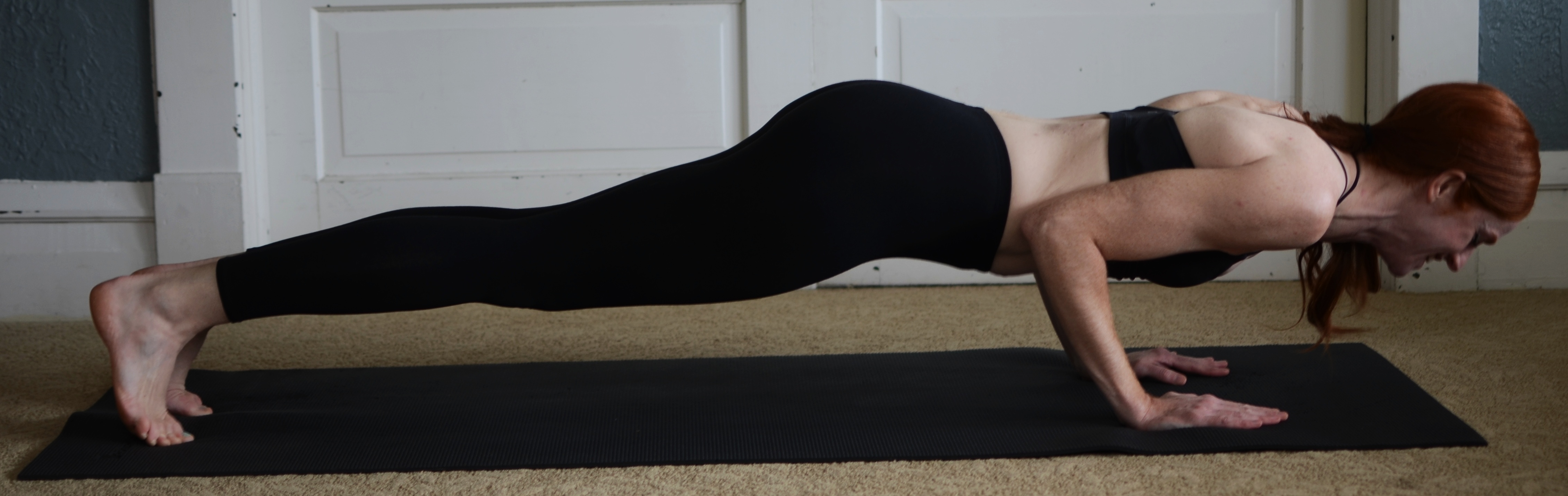
Crocodile Pose (modified)
“Makarasana” or “Nakrasana”
The crocodile pose strengthens arms and core
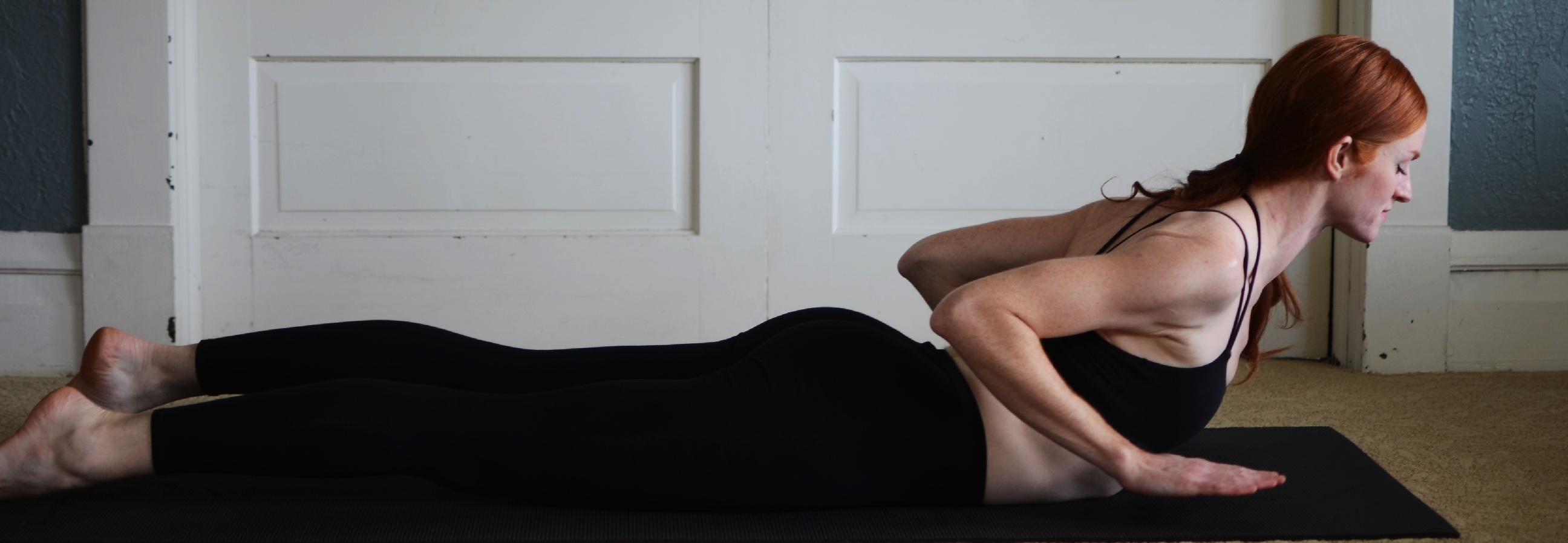
Cobra Pose
“Bhujangasana”
While you bend in this pose, you stretch the abdomen, neck and arms, while toning buttocks, shoulders and back of thighs. It opens up chest to strengthen lungs and increase the uptake of oxygen, and is thus considered good in treating asthma. Additionally, cobra pose promotes good digestion, relief from stress and fatigue and helps ease pain of sciatica.
Step 1
Pose Introduction
This video will slowly describe the poses – explaining what to do, and what to focus on for each of the new poses. Always respect and listen to what your body needs; where there is resistance or tension; you should NOT experience pain. Using a modified pose does NOT decrease the benefits of the pose. Ignoring your body DOES significantly decrease the benefits.
This sequence is not suited for pregnancy.
Step 2
Flow Sequence
It’s time to transition from pose to pose and match the movements you learned in the intro with YOUR breath. The first time through you can transition at the speed of Jenny’s breath, but eventually you want to transition at your own breath’s speed. Frequency: Once a week has benefits, but once a day, most days is a great goal! Once in the morning and once in the evening will provide maximum benefit if you can prioritize that in your schedule. Take advantage of any pose modifications that serve your body. It’s normal to find that your body will request different modifications from day to day, or even at different times of the day (ie: AM vs. PM)
Audio only: Flow Sequence Week One
Step 3
Audio Only
We recommend you watch the intro and the flow videos until you’re confident you know what each pose position is. Once you are confident, you may prefer to follow along with the flow sequence in audio only to allow a deeper connection to your body, breath and spirit. With a little practice, you will be able to do this flow sequence without video or audio prompts.
Poses introduced in Week One that are included in this sequence:
Child’s Pose
“Balasana”
Child’s pose is a true resting pose that you can hold for long periods of time without the need for props. Releases tension in the back, shoulders and chest. Recommended if you have dizziness or fatigue. Helps alleviate stress and anxiety. Flexes the body’s internal organs and keeps them supple. It lengthens and stretches the spine.
Downward [Facing] Dog Pose
“Adho Mukha Svanasana“
Pose benefits include:
1. Boosts energy
2. Eliminates back pain
3. Improves circulation
4. Strengthens the immune system
5. Builds upper body strength
6. Increases flexibility in the hamstrings
Plank Pose
“Chaturange Dandasana“
The benefits of plank pose are subtle yet important. Done properly and consistently, the most noticeable benefits include: Strengthening the wrists. Balancing the joints of the elbow and shoulder. Ab strengthener. Chest strengthener. Leg/ quadriceps strengthener. Elongate back. Increase respiration and circulation
Trackbacks/Pingbacks